

If you're reading this on a Tuesday evening, exhausted after work, glancing out the kitchen window at a lawn that's gone patchy, a hedge that's swallowing the fence, and a flower bed that's more weeds than flowers - you are not alone. Between work, family, and everything else life throws at you, garden maintenance in Dublin has a habit of sliding to the bottom of the to-do list. And once it slides, it tends to spiral: a fortnight of rain, a few missed mowing sessions, and suddenly the garden feels like a project rather than a place to relax.
The good news is that Dublin gardens don't need constant attention to look good - they need the right attention at the right time of year. Our climate here is famously mild but famously wet, which means grass grows almost year-round, weeds never really stop, and hedges can put on surprising growth in just a few weeks of soft rain and sunshine. Understanding that rhythm is the difference between a garden that's a constant battle and one that mostly looks after itself.
This guide walks you through exactly what a Dublin garden needs, season by season, so you know what to do (or what to ask a professional to do) and when. Whether you tackle it yourself or bring in help from a gardening service in Dublin like ours, the goal is the same: a tidy, healthy garden without it taking over your weekends.
And if by the end of this you decide you'd rather hand it over entirely - that's exactly what we're here for.
Why Garden Maintenance in Dublin Is Different
Dublin's climate is a mixed blessing for gardeners. We rarely get harsh frosts or scorching heat, which means plants survive well overall - but the constant moisture, heavier clay soils in many areas, and short bursts of intense summer growth mean gardens need a slightly different care schedule than you'd find in guides written for drier climates.
A few local realities worth knowing:
- Clay-heavy soil is common across much of Dublin, which drains poorly and compacts easily - this affects everything from lawn health to how well new plants establish.
- Mild winters mean grass and weeds rarely fully stop growing, so "winter is off-season" doesn't really apply here the way it does elsewhere.
- Short, intense summer growth spurts mean a garden can go from tidy to overgrown in as little as two or three weeks during a warm, wet stretch in June or July.
- Persistent rainfall makes proper drainage, mulching, and timing of jobs (like lawn feeding) much more important than in drier regions.
At Primegardener.ie, every plan we put together for a client factors these conditions in - there's no point recommending a lawn feed schedule designed for a dry climate when your garden in Rathmines or Clontarf is dealing with entirely different conditions.
Spring Garden Maintenance Tips (March–May)
Spring is when Dublin gardens wake up - and when most of the year's important groundwork gets laid.
Lawn Care in Spring
- First mow of the year: Once growth picks up (usually by mid-March), start mowing regularly but keep the blade height slightly higher than you would in summer - this helps the grass recover from winter.
- Scarify and aerate: Raking out dead moss and thatch, then aerating compacted clay soil, dramatically improves how well your lawn absorbs water and nutrients.
- Feed the lawn: A spring feed (higher in nitrogen) kickstarts strong, green growth after winter dormancy.
- Patch repair: Bare or patchy areas respond well to overseeding in spring while soil is warming and rainfall is reliable.
Hedges and Shrubs
- Give evergreen hedges their first shape-up of the year once the risk of hard frost has passed.
- Prune spring-flowering shrubs after they flower, not before, or you'll cut off the year's blooms.
Flower Beds
- Clear winter debris and weeds before they establish.
- This is prime planting season for many perennials and bedding plants suited to Irish gardens.
- Apply a fresh layer of mulch - it suppresses weeds and helps soil retain moisture through the drier spells that do occasionally show up.
Spring checklist:
- First lawn mow and feed
- Aerate/scarify if soil is compacted
- Shape up evergreen hedges
- Clear beds and refresh mulch
- Watch for slug damage on new growth
Summer Garden Maintenance (June–August)
This is the growth-spurt season - the garden can get away from you fast if you're not keeping pace.
Lawn Care in Summer
- Mowing frequency should increase, often to weekly, especially after a rainy stretch.
- Raise the mower blade slightly in dry spells to avoid stressing the grass.
- Weed control Dublin homeowners often ask about becomes especially relevant here - warm, damp conditions are exactly what weeds love.
Hedge Trimming Dublin Homeowners Rely On
- Most hedges need at least one solid trim in summer to keep their shape before autumn growth.
- This is also when overgrown boundary hedges (a common issue between neighbouring Dublin gardens) get tackled before they become a bigger job.
Flower Beds and Planting
- Deadhead flowering plants to encourage further blooms.
- Keep on top of watering during any dry spells - even Dublin gets the occasional two-week dry stretch.
- Continue weeding; summer weeds seed fast if left.
Summer checklist:
- Weekly mowing during peak growth
- Trim hedges before they get away from you
- Deadhead and weed flower beds regularly
- Watch for dry-spell stress on new plantings
Autumn Garden Tidy Dublin Gardens Need (September–November)
Autumn is where a lot of Dublin gardens get neglected - but it's arguably the most important season for setting the garden up for a low-stress winter and an easy spring.
Lawn Care in Autumn
- A final feed (this time lower in nitrogen, higher in potassium/phosphorus) toughens grass up for winter.
- Aerate again if soil has compacted over summer.
- Continue mowing as needed - Dublin's mild autumns mean grass often keeps growing into November.
Leaf Clearing and Garden Clean-Up
- Regular leaf clearing prevents damp, matted leaves smothering the lawn and encouraging moss and disease.
- This is peak garden clean up Dublin season - many of our clients book an autumn tidy-up specifically to deal with leaf fall, dying-back perennials, and general seasonal mess.
Hedges and Shrubs
- One final light trim before growth slows keeps hedges tidy through winter.
- Cut back dying perennials and remove spent summer bedding.
Autumn checklist:
- Final lawn feed and mow
- Regular leaf clearing (weekly during peak fall)
- Final hedge trim of the year
- Cut back dead growth and clear beds
- Remove and dispose of green waste properly
Winter Garden Maintenance (December–February)
Because Dublin winters are mild rather than frozen solid, gardens still need occasional attention - it's not a total shutdown.
- Lawns: Avoid walking on frosted grass (it damages the blades), but keep an eye on drainage - waterlogging is the biggest winter lawn issue here.
- Hedges and trees: Winter is a good time for structural pruning of deciduous shrubs and trees while they're dormant and bare, making shape easier to see.
- General tidy-up: Clear any remaining leaves and debris, check for storm damage after high winds, and plan ahead for spring.
Eco-Friendly Garden Maintenance in Dublin
More and more of our clients are asking about eco-friendly garden maintenance Dublin options - and it's something we build into our approach as standard, not as an upsell:
- Composting green waste where possible rather than sending it to landfill
- Minimising chemical weed killers and favouring manual weed control where practical
- Leaving small "wild" pockets or hedgerow sections to support local pollinators and birds
- Choosing plants suited to Dublin's soil and rainfall, reducing the need for excess watering or feeding
Sustainable gardening isn't just good for the environment - it usually means a healthier, more resilient garden long-term too.
A Real Transformation: From Overgrown Jungle to Low-Maintenance Garden in a Weekend
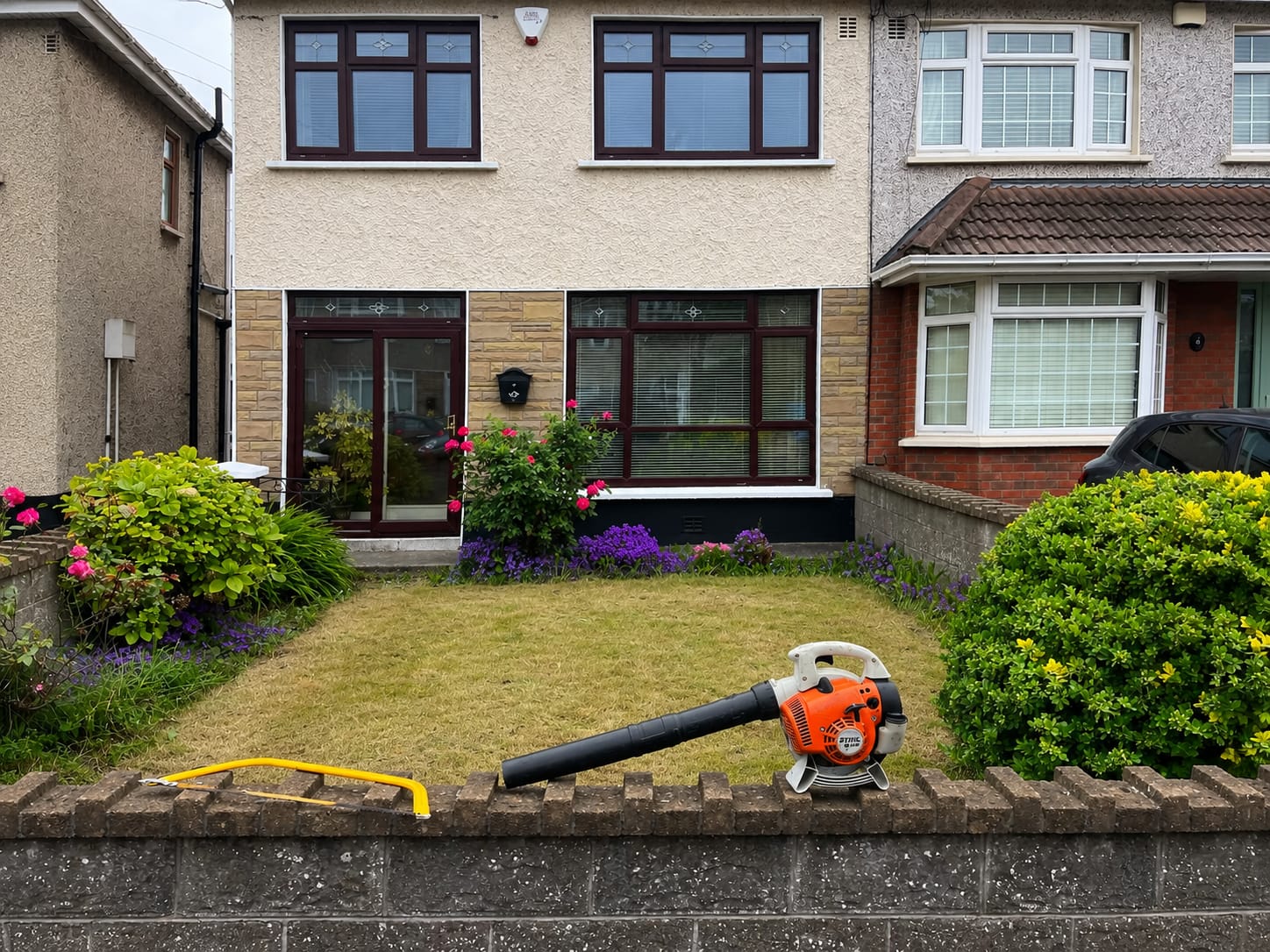
One client in Drimnagh got in touch after two summers of letting the back garden go - waist-high grass, a hedge that had swallowed half the patio, and flower beds that were entirely weeds. It felt, in her words, "like a jungle, not a garden."
"It felt like a jungle, not a garden." - client in Drimnagh, before her Primegardener.ie tidy-up
Over a single weekend, our team cleared the overgrowth, cut the lawn back in stages (cutting very long grass all at once can kill it, so it's done gradually), reshaped the hedge, cleared the beds, and hauled away every bit of green waste. By Sunday evening, the space was unrecognisable - a neat lawn, a tidy hedge line, and beds ready for replanting in spring.
The bigger win, though, was what came after: a simple fortnightly maintenance plan meant the garden never got the chance to slide back into overgrowth. That's really the heart of good garden maintenance - not a single big fix, but staying just slightly ahead of the garden all year round.
Summary: Keeping a Dublin Garden Looking Great, All Year
Garden maintenance Dublin homeowners can rely on isn't about working harder - it's about working with the seasons instead of against them:
- Spring: wake the lawn up, shape hedges, refresh beds
- Summer: keep pace with fast growth, control weeds, trim hedges
- Autumn: feed for winter, clear leaves, tidy everything back
- Winter: light structural work, drainage checks, planning ahead
Done consistently, this rhythm keeps a garden looking cared-for with far less effort than letting things build up and tackling it all in one exhausting weekend.
Let Primegardener.ie Handle It For You
If reading this made you tired just thinking about it - that's exactly why our gardening service at Primegardener.ie exists. We offer regular garden maintenance plans built around your specific garden, your soil, and Dublin's seasonal rhythm, so you get a consistently tidy garden without lifting a finger.
Ready to stop thinking about your garden and start enjoying it? Get in touch with Primegardener.ie today for a free quote or site visit.
WhatsApp us for a free quoteRelated reading: Preparing Your Garden for Winter in Ireland · Lawn Care in Dublin · Hedge Trimming in Dublin · 8 Common Dublin Garden Problems
Frequently Asked Questions
How often should a Dublin garden be maintained?
Most Dublin gardens do best with fortnightly visits during spring and summer (peak growth) and monthly visits in autumn and winter. Primegardener.ie tailors this to your specific garden's needs.
Is a one-off garden clean-up enough, or do I need a regular plan?
A one-off clean-up is a great starting point for an overgrown garden, but without ongoing maintenance, most gardens drift back to needing another big clean-up within a season or two. A regular plan keeps things consistently tidy and is usually more cost-effective over time.
What's included in a typical garden maintenance visit?
Depending on the season, this usually covers lawn mowing, edging, hedge trimming, weeding, and clearing away all green waste - so you're never left with a pile of clippings to deal with.
Do you offer eco-friendly garden maintenance in Dublin?
Yes - we compost green waste where possible, minimise chemical use, and take a sustainable approach to lawn and bed care as standard practice.
My soil is heavy clay - does that affect maintenance?
Yes, significantly. Clay soil drains poorly and compacts easily, which affects lawn health and planting success. We factor local soil conditions into every maintenance plan.
Can you take care of a garden that's already very overgrown?
Absolutely - this is one of the most common jobs we do. We typically bring an overgrown garden back under control with an initial deep clean-up, then move to a regular maintenance plan to keep it that way.