
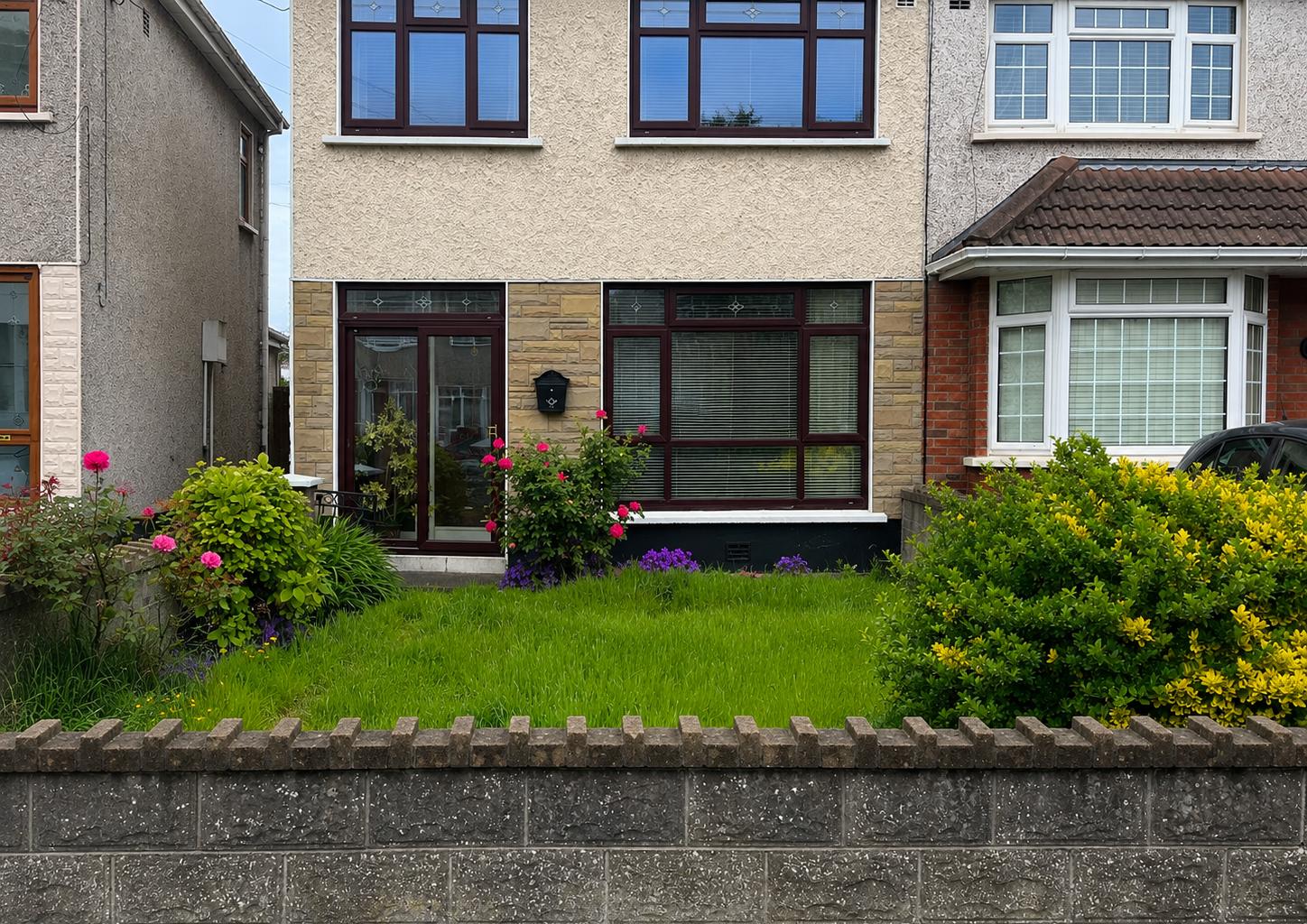
Ten years ago, fake grass meant the bright green carpet you saw outside a greengrocer. Today it is a different product entirely: realistic textures, mixed tones, soft pile, proper drainage. And in a climate like ours, where lawns spend half the year wet and the other half growing furiously, it is no surprise that artificial grass installation in Dublin has become one of the most asked-about services in our line of work.
But here is the honest bit that a lot of installers won't tell you: artificial grass is brilliant for some gardens and wrong for others. It solves mud, shade and constant mowing in one move, but it costs real money upfront, it is not maintenance-free, and it does not do what a living lawn does for soil, birds and pollinators.
At Primegardener.ie we look after natural lawns every week and install synthetic lawn turf as well, so we have no reason to push you either way. This guide covers how artificial grass actually performs in Irish weather, what a proper installation involves, what it costs over time compared to real grass, and the situations where we would and would not recommend it.
How Artificial Grass Performs in Irish Weather
The short answer: very well, provided it is installed correctly. Rain is not the enemy of artificial grass. A quality product has a perforated backing that drains faster than most natural Dublin lawns, so there is no mud, no puddles, and no brown patches in February. Good turf carries a UV-stable guarantee, which matters less for our sunshine and more for the long, bright days of summer. Properly installed, a quality artificial lawn lasts 15 to 20 years in Ireland.
The one weather note worth knowing is heat: on a rare hot July day the surface gets noticeably warmer than real grass. For most Dublin summers this is a footnote rather than a problem.
Natural Lawn vs Artificial Grass: The Honest Comparison
- Maintenance. A natural lawn needs mowing, feeding and moss control; see our lawn care guide for what that involves. Artificial grass needs an occasional brush, debris removal and a rinse. Low maintenance, not no maintenance.
- Cost. Real grass is cheap to establish and costs a little each year. Artificial grass costs significantly more upfront and almost nothing after. Over roughly a decade the totals often converge.
- Appearance. Artificial is green and tidy every single day of the year. A well-kept natural lawn in June still beats it on beauty, but a neglected one never does.
- Wildlife and environment. A living lawn supports soil life, worms and birds. Artificial does not, which is why we usually suggest keeping planted borders around it. Our eco-friendly gardening guide covers ways to balance this.
- Wear. Dogs, kids and daily traffic destroy natural grass in small spaces. Quality artificial turf shrugs it off.
Where Artificial Grass Makes the Most Sense
- Small and shaded gardens. Artificial grass for small gardens is the classic use case in Dublin. Tiny north-facing yards in the city centre, and courtyard gardens where real grass never gets enough light, are transformed by it. We cover more options for tight spaces in our small garden ideas guide.
- Pet households. An artificial lawn for pets handles digging, running and toileting far better than real grass. Solids lift cleanly and a rinse deals with the rest.
- Kids' play areas. No mud in November, no bare goalmouth by August, and a softer landing when installed over a foam pad.
- Weed-ridden problem lawns. Where a lawn has been lost to weeds and moss year after year, artificial turf over a proper membrane ends the battle for good. Compare it with restoring the real thing in our weed control guide.
Our Artificial Grass Installation Process
Nearly every failed artificial lawn we are asked to rescue failed at the base, not the grass. Cheap installs skip the groundwork; this is what a proper job looks like:
- Site assessment. We check drainage, access, levels and what the space is used for, then recommend a turf grade to match (pet, play or show lawn).
- Excavation. The old lawn and topsoil come out. Laying turf straight over grass guarantees lumps and weeds within two seasons.
- Base build. A compacted stone base, screeded level, so the surface stays flat and drains freely for decades.
- Weed membrane. A permeable barrier that stops weeds pushing through while letting rain drain away.
- Turf fitting. Rolled, trimmed, jointed and secured, with pile direction matched so seams disappear.
- Finish and after-care. Sand infill where the product needs it, a final brush, and clear guidance on keeping it looking new.
Case Study: The Dolphin's Barn Yard That Gave Up on Grass
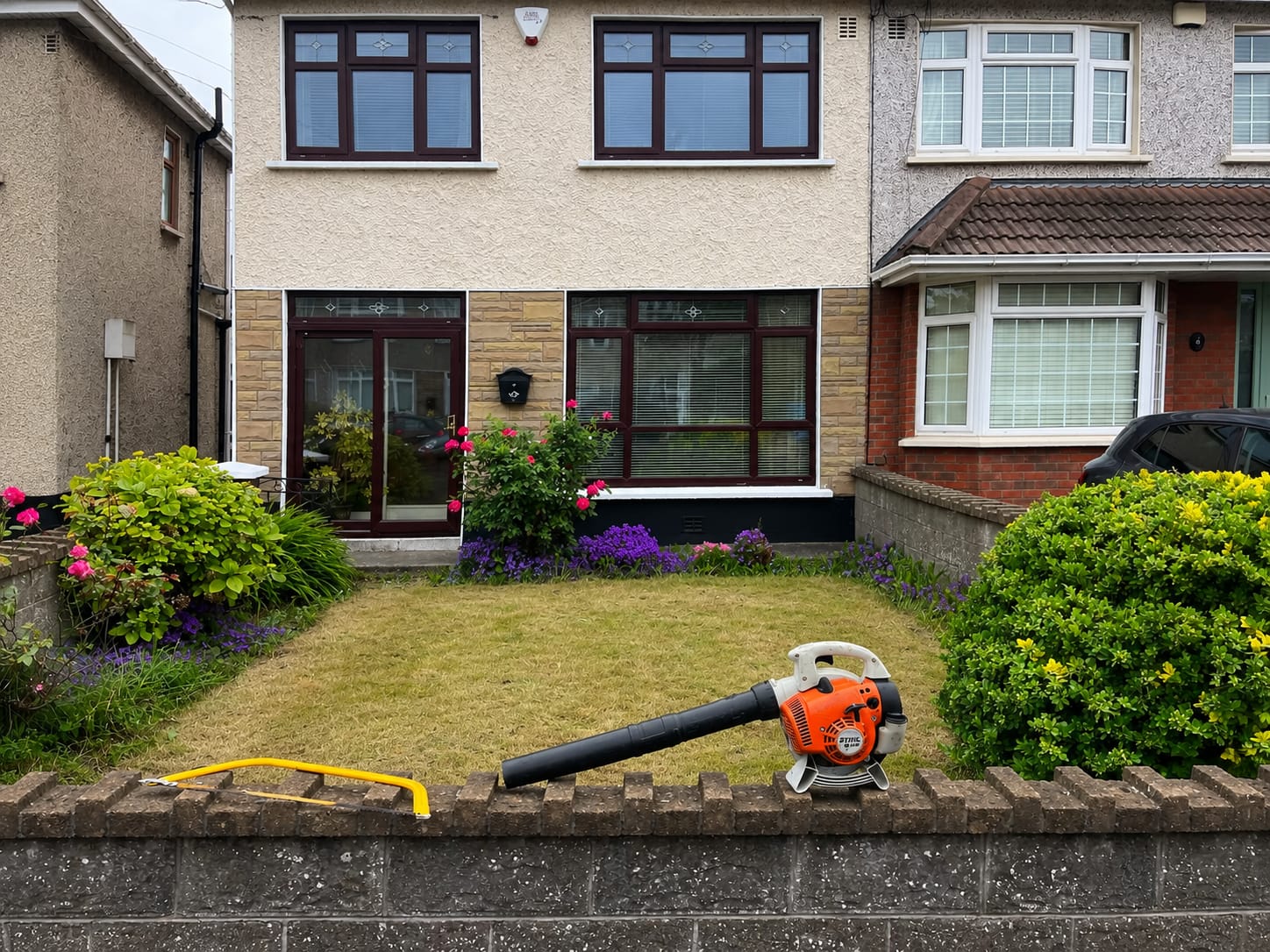
A couple in Dolphin's Barn had re-seeded their small, wall-enclosed back garden three springs in a row. Between the shade of the house, the compacted clay underneath and two energetic terriers, the grass never made it past June, and by each winter the garden was mud. They asked us to try seeding a fourth time; we suggested they consider synthetic turf instead and priced both options.
They chose a pet-grade artificial lawn. We dug out the tired turf, built a compacted base with upgraded drainage along the shaded wall, fitted a weed membrane and installed a realistic 35mm pile. The job took two days.
"Two winters on and it still looks like the day it went in. The dogs are delighted and the mop stays in the cupboard."
Their planted borders stayed, so the garden kept its greenery and its bees. That mix, living planting around a hard-wearing artificial centre, is the setup we recommend most often.
Looking After Artificial Grass
- Brush the pile against its direction every few weeks to keep it standing upright.
- Remove leaves and debris with a plastic rake or blower, especially in autumn.
- Rinse pet areas regularly; a mild artificial-grass cleaner deals with any lingering smells.
- Keep BBQs and fire pits well away from the surface. Melt damage is the one thing that cannot be repaired invisibly.
Quick Summary
- Modern artificial grass is realistic, drains brilliantly and lasts 15 to 20 years in Irish weather.
- The base and membrane decide whether an install succeeds. Never lay turf over an existing lawn.
- It is the right answer for shaded small gardens, pet households and hard-worn play areas.
- It costs more upfront than restoring real grass, but almost nothing after.
- Keep living borders around it so the garden still feeds pollinators and birds.
Related reading: Dog Friendly Garden Ideas for Dublin · Lawn Turfing in Dublin · Small Garden Ideas in Dublin
Wondering If Artificial Grass Suits Your Garden?
Send Primegardener.ie a few photos on WhatsApp and we'll give you an honest answer, along with prices for both artificial turf and restoring your natural lawn. Free site visits across Dublin and surrounding areas.
Get a free assessmentFrequently Asked Questions
Can artificial grass be installed over my existing lawn?
No, and any installer who says yes is cutting corners. The old lawn must be removed and a compacted base and weed membrane installed. Turf laid over grass goes lumpy and grows weeds within a season or two.
Is artificial grass OK for dogs? What about smells?
Pet-grade turf is one of the most popular products we install. Urine drains through, solids lift cleanly, and a regular rinse keeps everything fresh. In warm spells an enzyme cleaner removes any lingering odour.
Does artificial grass get hot in summer?
On the rare genuinely hot Dublin day the surface gets warmer than real grass, and lighter-coloured products stay cooler. For a typical Irish summer it is rarely an issue, and a quick rinse cools it instantly.
How much does artificial grass installation cost in Dublin?
Price depends on area size, access, groundwork needed and turf grade. Small courtyard jobs cost far less than full back gardens. WhatsApp us the dimensions and a photo and we'll quote clearly before anything starts.
What happens with drainage and heavy rain?
Quality turf drains through a perforated backing into the stone base beneath, usually faster than the lawn it replaced. Standing water on artificial grass means the base was built wrong, which is why we never skip the groundwork.
How long does installation take?
Most Dublin gardens take one to three days depending on size and access. Small courtyards are often finished in a day.