
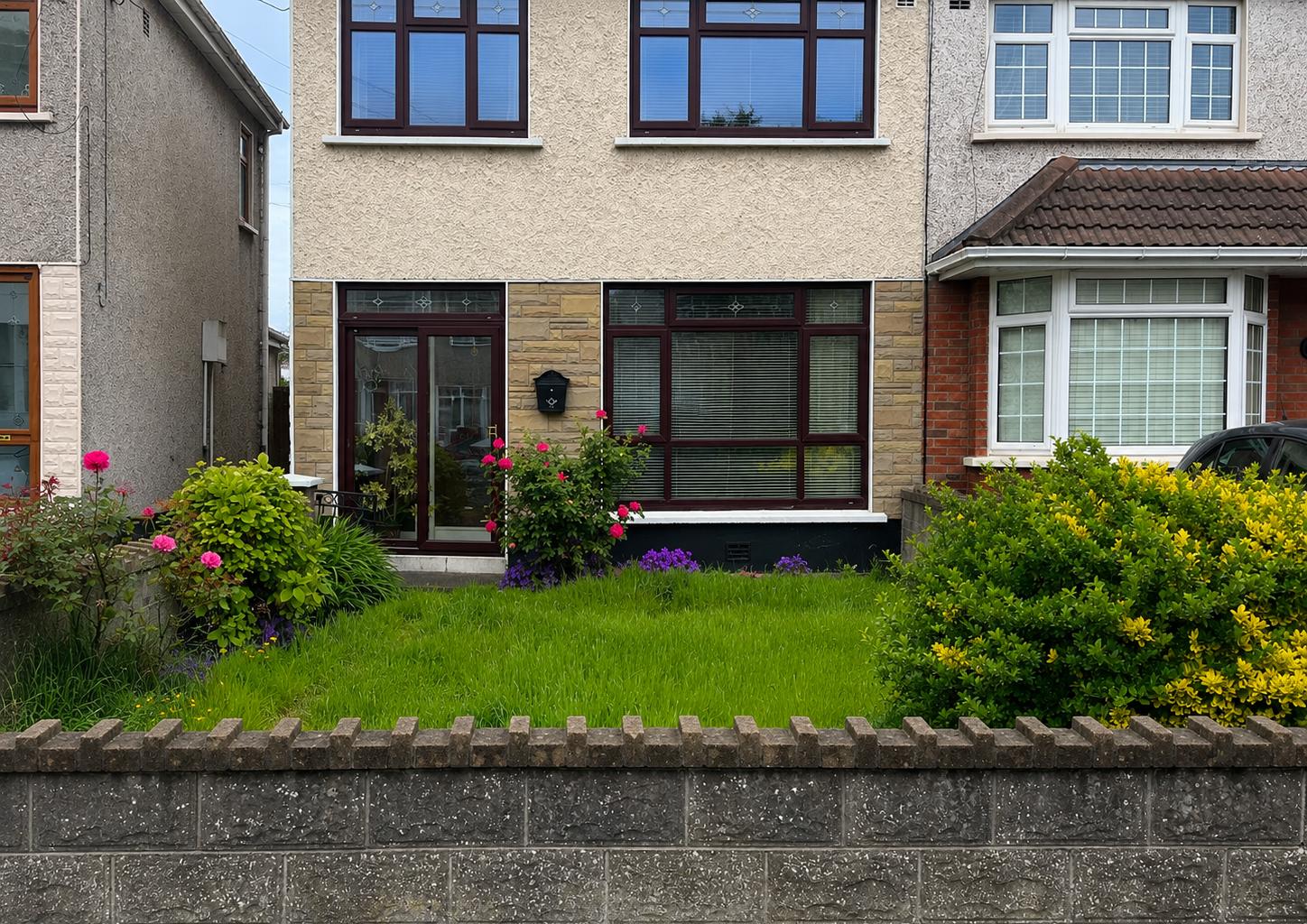
Some lawns can be rescued. Some cannot. When more than two thirds of the grass is gone to moss, weeds and bare clay, when a builder has left you a "lawn" of rubble under an inch of soil, or when you simply want a proper lawn this season rather than in two years, you are in re-turfing territory. And lawn turfing in Dublin is one of those jobs where the visible part, rolling out the green carpet, is the easy 20 percent. The other 80 percent happens underneath, and it decides whether your new lawn is still beautiful in five years or dead in eighteen months.
We lay new lawns across Dublin every year, and we also get called to look at turf that failed because the groundwork was skipped. This guide covers when turfing beats repair, the honest comparison between turf and seed, what proper preparation involves, realistic costs, and how to nurse a new lawn through its critical first year.
Repair, Seed or Turf? Choosing Honestly
- Repair (scarify, aerate, overseed): the right call when at least a third of the existing lawn is healthy grass. It is the cheapest route and the one we recommend most often; the full process is in our lawn care guide.
- Seeding from scratch: the budget route to a new lawn. Costs a fraction of turf, offers more choice of grass mixes, but takes a full season to become usable and needs protection from birds, weeds and feet the whole time.
- Turfing: an instant lawn, usable within weeks. Costs more, but wins wherever patience is short: family gardens, house sales, and any garden where a season of roped-off mud is not realistic.
Why Ground Preparation Is the Whole Job
Turf laid on unprepared ground fails, and Dublin's heavy clay makes preparation even more important than the guides written for lighter soils suggest. A proper turfing job looks like this:
- Strip the old surface. Old grass, weeds and debris come off completely. Laying turf over dying grass builds failure in from day one.
- Fix what is underneath. Compacted clay is broken up, buried rubble comes out (a constant find in newer estates), and levels are corrected so water sheds rather than pools. Persistent wet spots get drainage attention now, not after; our garden problems guide explains why waterlogging must be solved first.
- Build the growing layer. A bed of quality screened topsoil, firmed and raked to a fine, level finish. This layer is what the turf roots into for the rest of its life.
- Pre-turf feed. A starter fertiliser worked into the surface gives roots a running start.
- Lay, stagger, firm. Rolls laid brick-fashion with tight joints, firmed for soil contact, edges trimmed clean.
- Water like it matters. Because it does: a new lawn's first fortnight of watering decides everything.
What Lawn Turfing Costs in Dublin
Honest ballparks: supplied-and-laid turfing typically runs €15 to €30 per square metre depending on how much groundwork the site needs, access, and soil condition. A typical small Dublin back garden lands somewhere between €600 and €1,500 all-in; larger or rubble-filled gardens more. Beware quotes dramatically below that range, because the money saved is almost always the preparation, and skipped preparation is the one mistake a lawn never recovers from. Our approach to pricing, and why the cheapest quote usually is not, is covered in the gardener cost guide.
When to Turf in Dublin
Turf can technically be laid most of the year in our mild climate, but the sweet spots are spring and early autumn: warm soil, reliable rain, and time to root before stress arrives. Mid-summer turfing works with committed watering; laying into a frozen January is the only true no.
Case Study: The Builder's Garden in Lucan
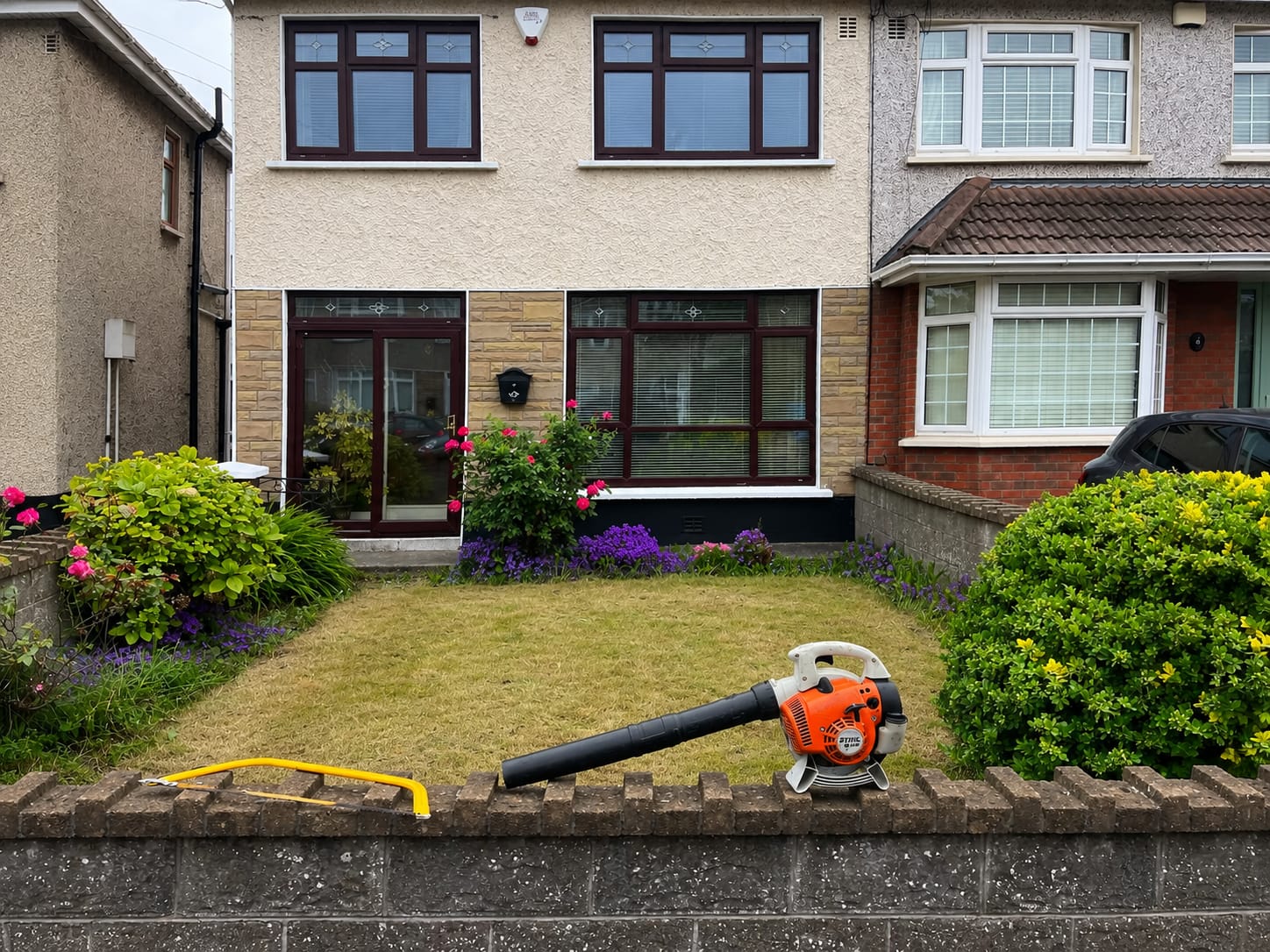
A young family in Lucan moved into a new build with the classic developer's lawn: thin turf over compacted subsoil and half a skip of buried rubble. By their second summer it was dead in patches and swamp in others, and two years of feeding and seeding had changed nothing, because nothing could root.
We stripped it, pulled out three barrows of rubble, decompacted the subsoil, built a proper 100mm topsoil bed and laid fresh turf in September. With autumn rain doing the watering, it rooted in three weeks.
"Two years of fighting that lawn, and the real problem was six inches under it the whole time."
Their fortnightly mowing plan keeps it thick, and the difference between maintaining a well-founded lawn and fighting a doomed one is the difference between our cheapest service and our most futile.
The First Year: Making a New Lawn Permanent
- Water daily for the first two weeks (unless raining), then taper off as roots take
- Stay off it for three to four weeks; first light mow when it cannot be lifted by hand
- Mow high for the first season, never removing more than a third
- Feed in the first spring and autumn to build density
- Watch edges and shaded corners, the first places trouble starts
Key Takeaways
- Turf when less than a third of the old lawn is worth saving, or when you need a usable lawn this season.
- Preparation is 80 percent of the job: strip, decompact, remove rubble, build a real topsoil bed.
- Expect €15 to €30 per square metre supplied and laid in Dublin; cheaper usually means skipped groundwork.
- Spring and early autumn are the ideal windows in the Irish climate.
- The first fortnight of watering and a gentle first season make the lawn permanent.
Related reading: Lawn Care in Dublin · Artificial Grass Installation in Dublin · Garden Landscaping in Dublin
Want a Proper Lawn, Done Properly?
WhatsApp Primegardener.ie a photo of your current lawn (or what is left of it) and we'll tell you honestly whether repair, seed or turf is the right call, with a fixed price for the full job including groundwork and waste removal.
Get a turfing quote on WhatsAppFrequently Asked Questions
How much does lawn turfing cost in Dublin?
Typically €15 to €30 per square metre supplied and laid, depending on groundwork and access, with small back gardens landing between €600 and €1,500 all-in. You get a fixed price after photos or a quick visit, and preparation and waste removal are always included.
Is turf better than seeding a lawn?
Turf gives a usable lawn in weeks and suits families and house sales; seed costs far less but takes a season of protection to establish. On well-prepared ground both produce an excellent lawn, so it is really a question of budget versus patience.
When is the best time to lay turf in Ireland?
Spring and early autumn are ideal: warm soil and reliable rain. Summer works with committed daily watering. Only frozen or waterlogged ground rules laying out entirely.
How soon can we walk on a new lawn?
Keep off it for three to four weeks while it roots, then use it gently for the first season. The first mow comes when the turf resists a gentle tug, cut high with sharp blades.
My new-build lawn keeps dying. Is re-turfing worth it?
Only with proper preparation. Developer lawns typically fail because of buried rubble and compaction, so new turf over the same base fails the same way. Fix the ground once, properly, and the next lawn lasts decades.